See Us on YouTube

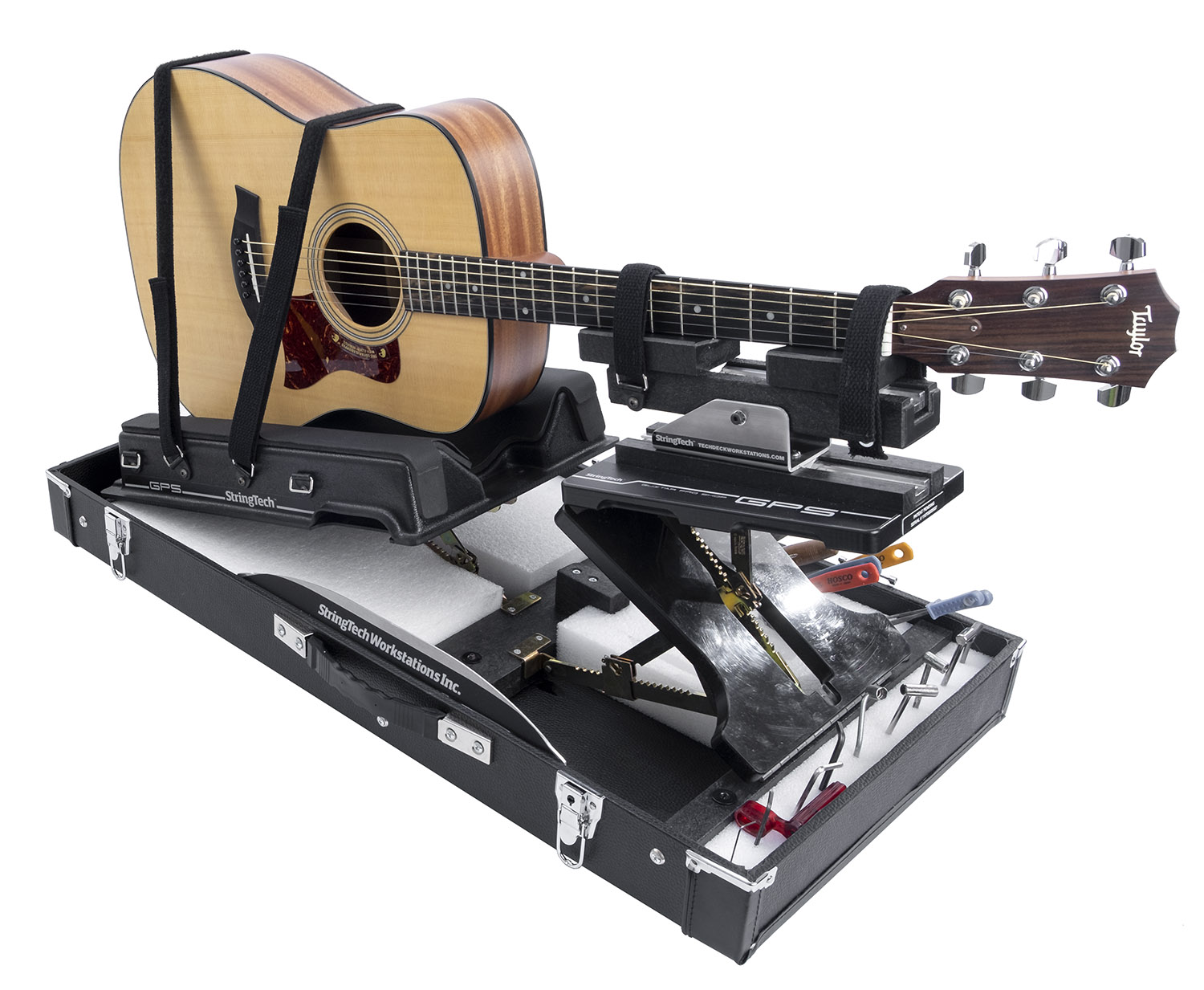
See the Tech Deck and the Students in action on YouTube !

Click on link below

http://www.youtube.com/watch?v=nNMMeSH9PDE


Sunday, May 6, 2012

Spring 2012 Week 4 / 5 .... Getting the goods on proper fretwork technique.


Calibration / Lubrication / Care + Maintenance Tips 

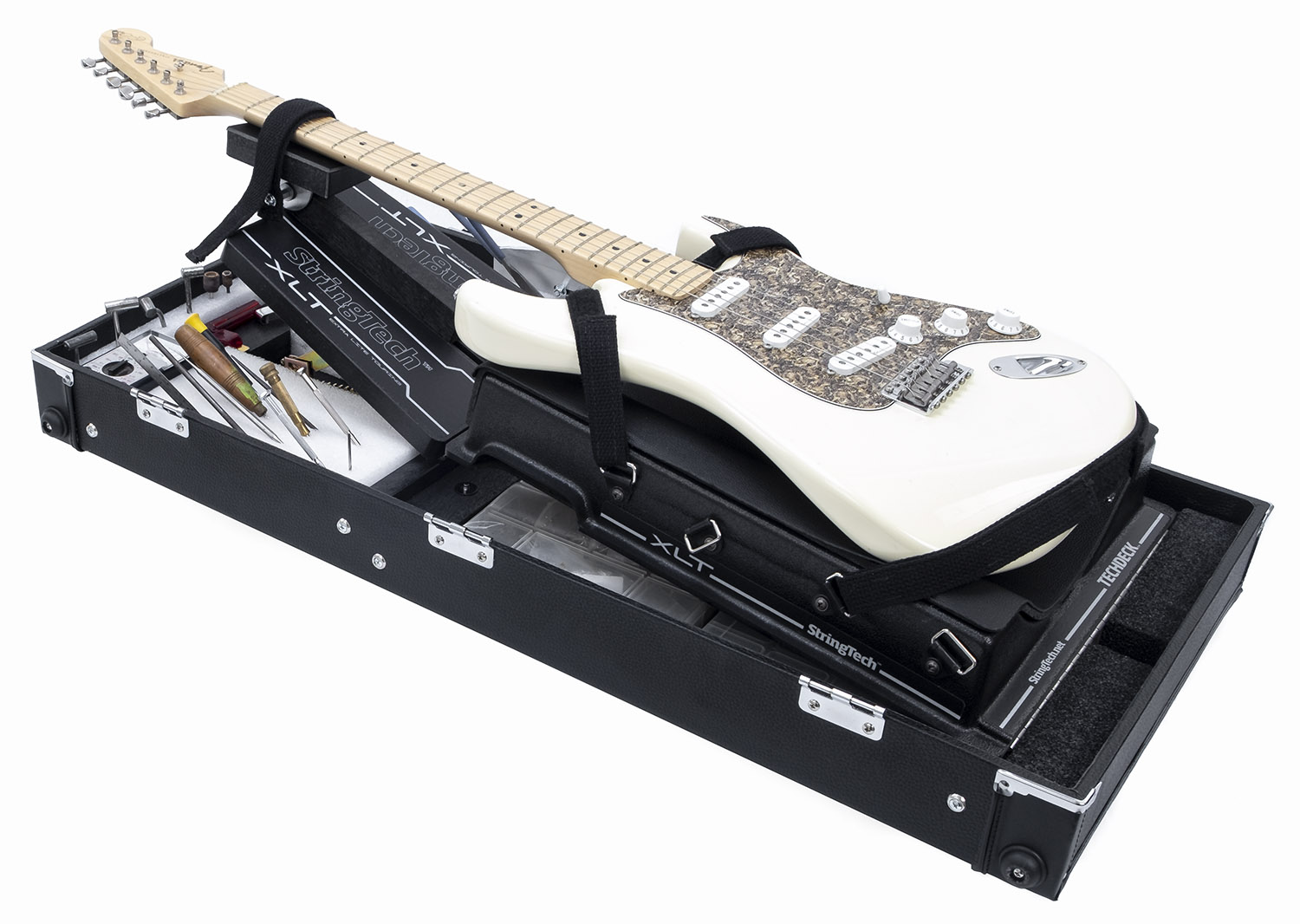
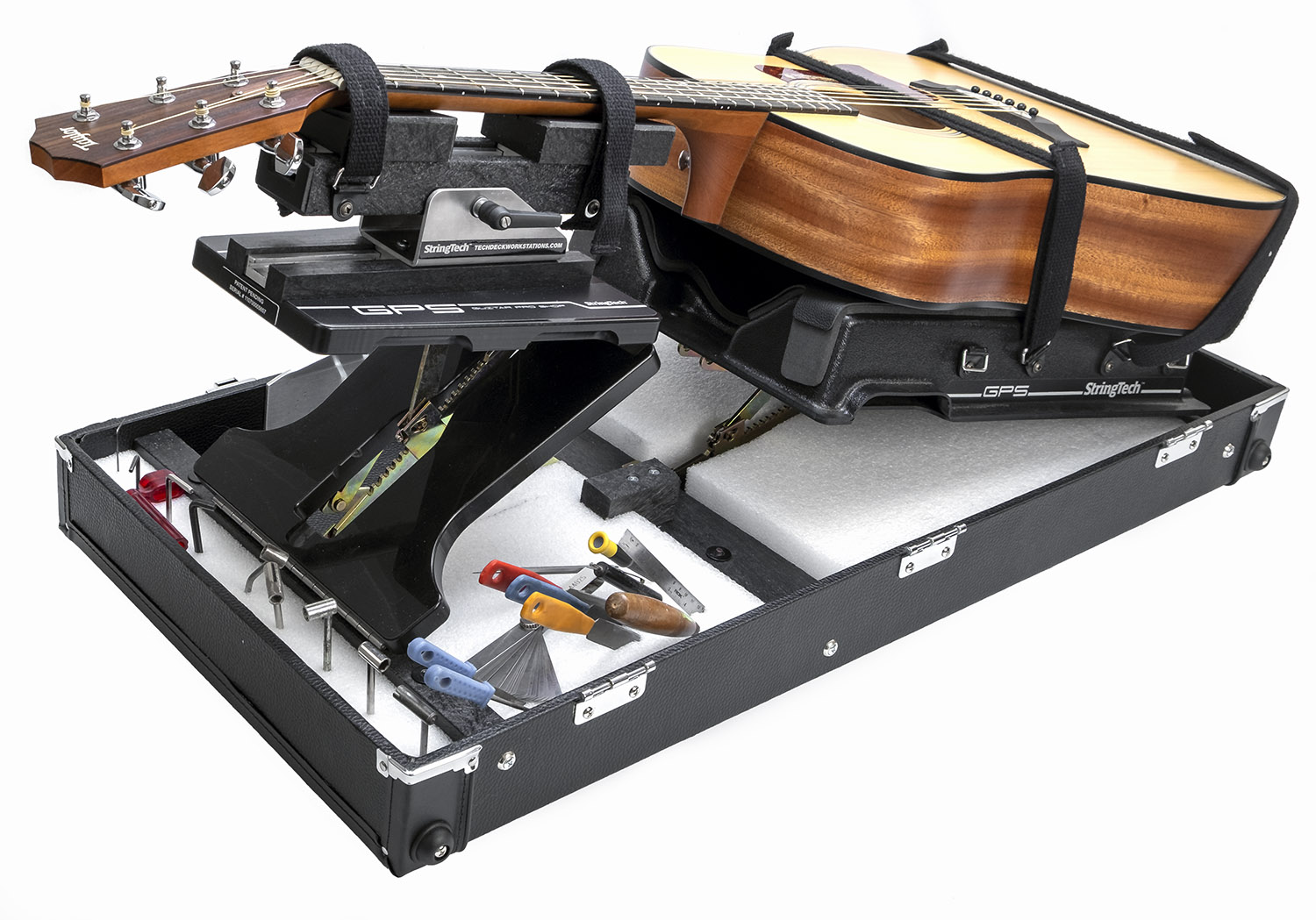
for the TechDeck

Although these six new TechDecks were already calibrated, straight out of the box;
a few pointers were given, so that a year or two down the road,
if the unit needs some slight adjustment or calibration,
all of these guys will easily be able to re-calibrate
the TechDecks to their own taste.


It was evident by the second class, that all 6 of these students
were "zoned right in" to the obvious
advantages of the TechDeck workstation.
No sales job required;
the TechDeck clearly speaks for itself.
 They all picked up their brand new units and took them home today !
Congratulations guys; you'll all have a blast "earning while you're learning".

This is a highly active group of Level 1 students who are soaking it up 
and diggin' in.

"5 Complete re-frets on the go" this class !


Roger and Rylan are the  3rd father / son  team to take the course.


The student "paparazzi" ( above ) are getting the scoop on a Gibson Les Paul nut removal.  


Erich "zoning in " on his fret board levelling before installing the new frets.


Roger and Rylan breathing new life into this old LG Gibson.


This class was a whirlwind of activity.


Rob picked up this LP off of ebay and is re-doing
someone else's previous attempt at a fret job.

Wednesday, March 14, 2012

Guitar Repair and Design - Conestoga College - Stratford


Guitar Repair and Design

Contact:
Michael McConville mcconville@wightman.ca


Level 1: 

 
Synopsis:

This introductory course will provide students with hands-on training in the set-up and repair of acoustic and electric guitars. A detailed study of fretwork technique, including safe fret removal, correcting the lay of the neck, fret levelling, re-crowning and polishing; the fabrication of hand-cut nuts and saddles and an overview of the basic physics and design of the various members of the guitar family. All of the elements that determine the instrument's ability to perform at it's optimum level of playability will be covered. These 3 hr classes are run once a week for 6 consecutive weeks.Workstations and hand tools will be supplied, for the duration of the course. The student will walk away with the ability to accurately set up guitars and to level / edge dress / and refret the fingerboard. There are several dedicated hand tools that are fabricated for the students to take home with them upon completion of the course. Discussion of the business aspect of guitar repairs is also covered for those that are interested in working on instruments to generate a part time or full time income. Support material such as updated price lists for the industry, will assist the student in evaluating the the work and assessing the repair price for various common repairs / restorations and adjustments.    

Tuition:    $775.00


Neck Reset/ Refret on 60's Harmony acoustic
If you look carefully, you'll see the hockey puck.
A sure sign of the Canadian version of the Guitar Repair Class Semi-finals !


As a group, these guys completed $4000.00 ++ worth of repair and restoration work
over the duration of the course. Great job done guys !

Milan ( Toronto ) did a complete re-fret and compensated nut on his Ovation
 ( flawlessly done , I must add )!  This was done in conjunction
with multiple lessons in Guitar Repair and Restoration technique,
observing what all the other students around him were doing.

Jeremy ( Lindsay ) accomplished so much during this course,
 that it is hard to recall everything he did!
If you're up Lindsay way, in need of some guitar work,
 look him up ... he's got the ears and the touch.


Terry ( Paris ) is a very meticulous worker with a precise touch.
Everything he did was done with attention to detail.


Dave ( Innisfil), managed to complete a neck reset (steaming off the dovetailed neck), slipped off the bridge / re- radiused the foot, cleaned up the soundboard surface and reglued, completed a refret ( including levelling the fingerboard ), cut a compensated nut from a tusq blank, re-slotted the bridge and cut a custom fit tusq intonated saddle !


Guitar Technician Training

Thanks goes out to all of the students from across the Province; especially those who have driven to Stratford each week,  from Leamington, Windsor, Barrie, Woodstock,  St.Catherines, Oakville, Georgetown, Cambridge, Kitchener-Waterloo, St Agatha, Toronto, Ajax, Oshawa, Lindsay, Niagra Falls, Goderich, Listowel, Peterborough, London, Long Point, Alymer, 
Guelph, Acton, Hamilton, Wingham, Dundas, Owen Sound, Chatham, Mississauga and Brampton to attend these classes. 


This past 41/2 years has been a testament to the conviction and dedication of all the students. The attendance record and enrolment  has demonstrated the obvious need in the Industry, for qualified people. My gratitude goes out to all of you, for your faith, and encouragement.

Sunday, March 11, 2012

Tony McManus / Loreena McKennitt / PRS ... 911 call

Grace under pressure ....


As Loreena McKennitt and her all-star cast of musicians ...

Tony McManus, Brian Hughes,
Ian Harper, Ben Grossman,
were rehearsing and ramping up
for the start of their European tour;
Tony McManus was having issues
with the acoustic / electric system
in his beautiful PRS "Angelus" proto-type bouzouki.

When IATSE / Pro-Tour-Tech  Phillip
called me on Sunday afternoon,
I was working peacefully at my workbench
and finishing up a fret job on a maple-neck strat....

then ... uh-oh ....!

this was one of those " drop what your doing .. all hands on deck, "
panic-button, 911 calls.

Find the problem ( in this case problem"s" ) and fix them,
whatever it takes.


I fabricated this mini-plate out of rosewood, adhered the pickup strip to this plate,
 and then glued this mini-plate to the actual bridge plate with wood glue.
The small black plastic tab / connector has a piece of 2-sided cloth tape 
that was used to adhere a small foam cube to (after the wood glue set ).

The foam cube, created a "buffer",
between the plastic connector tab
and the underside of the X-brace and soundboard surface, 
eliminating any chance of , rattling or
extraneous sympathetic / mechanical vibration
being transmitted
between the wood and the plastic tab. 


After removing the loose, bubbled piezo film strip ( see below )
and inspecting the bridge plate ( above )
 it became evident, by the left-over "footprint"( residue ),
that there were 3 previous install attempts ( by others );
and that I would be the fourth 4th in line to take a 
run at installing this pickup.  


After spending a couple of hours, meticulously,
scraping and washing the rosewood bridge plate;
I finally got it cleaned up and ready
for the mini-rosewood plate
that I had fabricated.


The second malleable wire clip ( above ) ,
was used to "press" the black plastic tab/ connector
into the foam cube, that I previously mentioned.


The "0" tolerance for the placement of the pickup
 is evident in the (above) photo.
In the previous installation attempts ( by others ),
the proximity of the ball ends of the strings were
so close, that they were overlapping
and "nipping " into the the piezo film, causing it to
 short out !

In all fairness to the others who had attempted this install ...
the "smaller than usual" space at the apex of the X-brace, meant that there was much less room than you would normally have for this type of installation.
A regular guitar would allow much more space at the intersection of the X-brace.   


After successfully re-engineering a whole new approach
 to the piezo film install, I discovered that the pre-amp was shorting out as well !!

Welcome to "Murphy's"  place
 .. just step right in .. and scrape the dung from your boots!

PRS got right on it and Fed-Ex-ed a new pre-amp,
from Maryland USA, and it arrived Monday AM !
I proceeded to transfer all of the leads
 from the old faulty circuit board to the new replacement;
battery terminal leads, volume pot leads and piezo pickeup leads. 

(32 solder points in all, dis-connected and re-connected !)


This job is definitely another good argument for the
 leather padded TechDeck workstation's virtues. 

This $3500.00 one-of-a-kind
proto-type was built the week before I worked on it !

(See date on label below)

It is essentially, ... a brand new instrument

Over the course of a few days,
I had to get in and out through the soundhole,
 flipping the instrument up on it's edge etc
... dozens of times in order to complete
all of  the various tasks.

The smallest, most minuscule scratch,
 or mark from mis-handling ,
would have shown up like a neon sign.

The only thing that came in contact with this instrument
while doing this emergency repair/ install,
 holding it in the various positions; was  "AAA" grade leather.
I have to say Thank you to the TechDeck Team once again, 
Scott, Thuy, Trong, John, Rick, Loren, Laverne and Ron ..
 you guys have nailed every possible case scenario with
 an amazing feat of engineering; in the design of the TechDeck.
This emergency install is just one more example of how
the TechDeck has "saved my ass" by providing a seamlessly
adjustable leather-padded work-platform that allows me to work on all
instruments .... calmly, peacefully, and safely,
 with maximum concentration.

Saturday, March 3, 2012

Ernie King / Luthier / Musician / Innovator RIP

Ernie King
Luthier / Musician / Innovator 
Wingham, Ontario, Canada 

There are many heavy hearts in the Canadian Country Music Industry,
with the news of Ernie King's passing away on Febuary 29th,
after his long term battle with an inoperable brain tumor.

My own recollections of Ernie's soft-spoken gentle demeanor
and encouraging words, strike deep, as we all mourn the loss
of this multi-talented and gracious man.

I don't think Ernie ever gave any thought to how big of an influence
he was to all of us.

He was always lost in the love of his work,
 embracing new ideas with vigor and excitement.

The last few times I was up to visit ... he was still
sneaking out to the workbench at 5:00 AM
to work on his latest project ... at the age of 79 !!
One of his most recent inventions, a Tenor Dobro-Mandolin
that he had designed and built;
absolutely blew my socks off !

He was always quick to share his latest innovations
as we swapped "shop-talk".

Ernie, you will be sorely missed.

My condolences go out to his family
and loved ones ( of which there are many ! )
and especially nephew Dwayne King.

Dear gentle, considerate and loving
 Ernie King ....
 RIP.  


Thursday, February 23, 2012

1966 Howard Roberts Epiphone Guitar


On a Sunday afternoon, a couple of weeks ago, 
after diggin' up my old Howard Roberts Super-Chops
book out of the library;
I decided that I should dust it off and 
 and see if I could remember any 
of the fingering that I had worked out a few years ago.

When I stopped for a break and checked my email 
... Bill had sent an email, enquiring whether I could help him out 
with his1966 Howard Roberts  guitar !!


There were a few issues that needed to be addressed.
First of all, I needed to get rid of the 
Gibson ABR tunomatic bridge for a couple of reasons. 
The plastic saddles were a definite tone killer;
 the other problem was that the
 pre-engineered arch of the ABR bridge,
did not match the fingerboard radius.
Because of the high arching on the fingerboard
 (approx  7" radius ! ) ...
and the much lower radius
of the ABR bridge ( 14" apprx )
the middle strings ( d + g) were splatting out
when the action was dropped to where it should be
for the outside strings ( e+e ).

I cut a new Brazilian rosewood replacement; 
sculpted and intonated , with the proper 7" radius
out of some old BR stock that I had kickin' around.

This rosewood bridge delivers the resonance to 
the ( solid ) soundboard much more efficiently than the 
the ABR with it's plastic saddles.

I also cut a tusq compensated nut and dressed 
the upper frets to get this Ol' Girl to behave.

Acoustically ... it doubled in volume.

Now, the "immediacy of attack" and the 
nice woody mid-range and bass has been restored.


Thursday, January 26, 2012

Vintage 1969 - 71 Gibson ES 150 ( Joe Pass )


Dave dropped this ES 150
off for some fret work /
setup / compensated nut.


He mentioned that the fellow he purchased it from
had bought it from Joe Pass ( RIP )!


Apparently Joe had signed it, these pictures ( below ) were in the case.


After some second thoughts the fellow
 had decided to have the signature taken off ...
I would have left it signed myself .


The tilted angle of the headstock ( below )  is a little extreme .. but a lot of the work on these early guitars was done by hand. I would imagine that whoever disc-sanded the face of the headstock had a bit of a " list to the port ".

But the neck itself was not twisted.
 

That's a Gretsch on the other workstation
that was in for some similar work.
  

This was a tricky fret dress on the ES 150.


I've decided to post this for the Level 2 students
and experienced Luthiers / Techs
 to show how I handle this type of job.

Because of the multiple discrepancies in the lay of this neck,
 it needed to be spot dressed in a few different places.

The rubber blocks allowed me to string up the neck with tension,
 balance the load on the truss rod,
simulating the actual lay of the neck under natural string tension.

The TechDeck's pivoting neck assembly
 really does the job
to support and restrict the flex of the neck 
while the fret levelling is done on this very tricky fret dress.
During the whole procedure
 the instrument is held firmly against
the leather padded rails of the adjustable body platform,
preventing the guitar from slipping,
shifting or wobbling around while your working. 
The space between the rails allows room for the
arched form of the back to be fully supported.
The body is cinched down very firmly with the leather straps,
 without an danger of crushing or mashing the arch into a flat surface.    


I then checked for high spots with a 6" and 12" straight edge,
and slipped a ( very straight ) 6" single cut mill file under the strings
to "spot dress" dress all the high points, that were
 spread randomly, along the length of the fingerboard.

Ron Anderson, the TechDeck machinist, had picked up the
" black magic marker " tip from a post that
somebody had put up on the Telecaster forum.

This came in handy for this particular job.
After marking the fret crowns with the
black magic marker,
and doing the initial light dress with the 6" mill file
... all of the various high points lit right up.

Once all the high spots were taken care of ,
this was followed up by the
regular re-crowning and polishing steps.  


This is what they looked like ( above )  after final buff.


The inlays were masked off during the recrowning and polishing.


This is a nifty little vice that Bob Toft ( Level 2 student )
located at Busy Bee .... $20 !
Just go out and buy one right now while they're still available !

 Thanks Bob ... for finding and sharing this little puppy
 ... the best one I've seen yet... anywhere for any price!


The lacquer was carefully scraped off both ends of the nut before removal ....
to avoid any chipping of the neck finish.


Got the nut out nice and cleanly.


First stage of tusq nut blank.


Second stage of compensated blank.


Transfer of string spacing.


For TechDeckers and students  .... 
this is how I strap the guitars down
 for working / or changing / machine heads / 
or reaming out the headstock etc...

This puts the headstock in the centre of my chest while working.


Final compensated nut .... very subtle ...
 at a glance you would think it was the original.